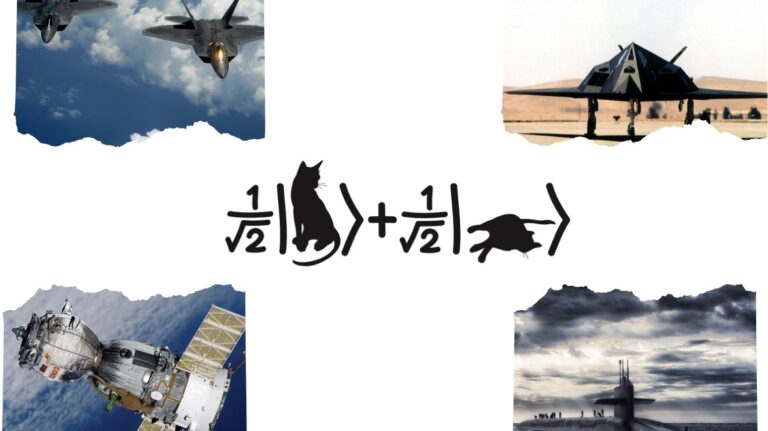

Quantum technologies promise transformative impact in defence, yet their fragility, cost, and slow Technology Readiness Level (TRL) progression often delay practical deployment. Hydrodynamic quantum analogues—droplets bouncing on vibrating fluid surfaces that mimic quantum behaviors such as tunneling, interference, and orbital stability—offer a pragmatic bridge between theory and application. Unlike delicate qubits, these macroscopic systems are robust, observable, and cost-effective, making them ideal testbeds for defence innovation.
By simulating quantum-like dynamics in accessible environments, hydrodynamic analogues allow defence researchers to explore concepts critical to future conflict: swarm intelligence, secure communications, probabilistic decision-making, and adaptive sensing. They create a common platform where scientists, warfighters, and strategists can experiment collaboratively, grounding abstract quantum theory in tangible, repeatable models. Most importantly, they enable disciplined progression across TRLs, validating algorithms and operational concepts before investing in fragile quantum hardware.
For militaries seeking quantum advantage without succumbing to hype, hydrodynamic analogues embody a strategy of realism: test in droplets, scale to doctrine, and only then translate to quantum. In preparing for the quantum era, defence may discover that the path to readiness begins not in a lab of superconducting circuits, but in the ripples of a fluid surface.